


Master essential dog training exercises at home! From basic cues to mental enrichment, learn how to train your pup with joy and confidence.
Training isn’t just about commands—it’s about connection. The best dog training exercises don’t feel like discipline; they feel like a shared language between you and your dog. Imagine a pup that doesn’t just “listen,” but actually wants to work with you, looks to you for guidance, and enjoys every interaction.
That’s the real goal.
When done right, dog training exercises create more than good manners. They burn energy, reduce anxiety, and turn everyday moments into opportunities for bonding. A well-trained dog isn’t just easier to live with—they’re calmer, more confident, and more in tune with you.
At Furrycozy, training is seen as part of a lifestyle. It’s not about rigid routines—it’s about creating a calm, stylish, and joyful home where both you and your dog thrive.
The Essentials: Basic Foundation Exercises
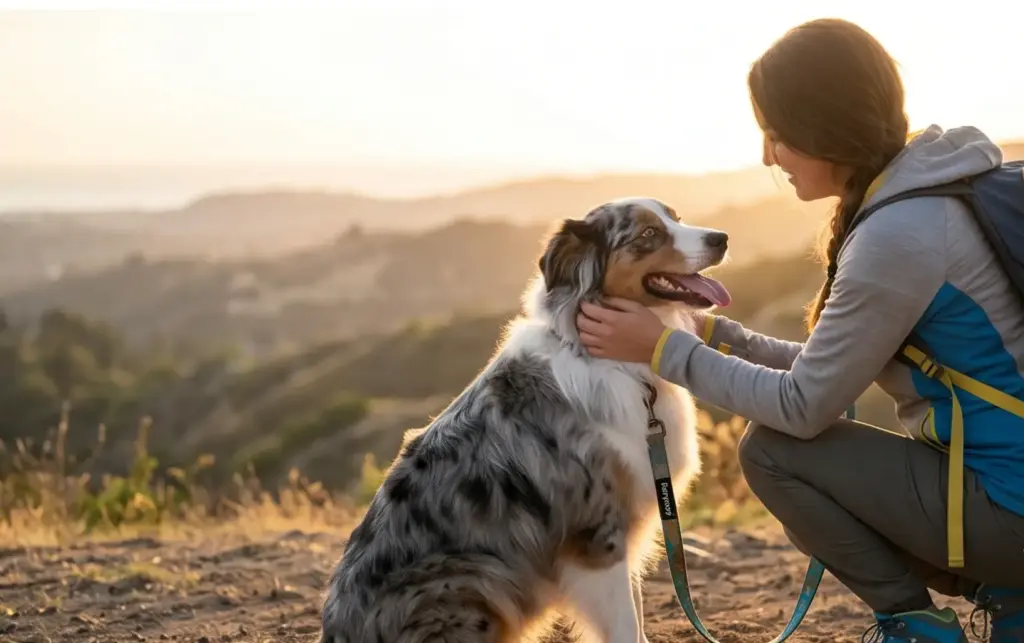
Before jumping into advanced tricks, every dog needs a strong foundation. These core dog training exercises build communication and trust.
1. The “Focus” Look
This is where everything begins.
Teaching your dog to make eye contact on cue helps you get their attention in any situation.
How to do it:
- Hold a treat near your eyes
- Say “Look” or your chosen cue
- Reward the moment they make eye contact
Why it matters:
This simple dog training exercise builds engagement. Instead of distractions controlling your dog, you become the most interesting thing in the environment.
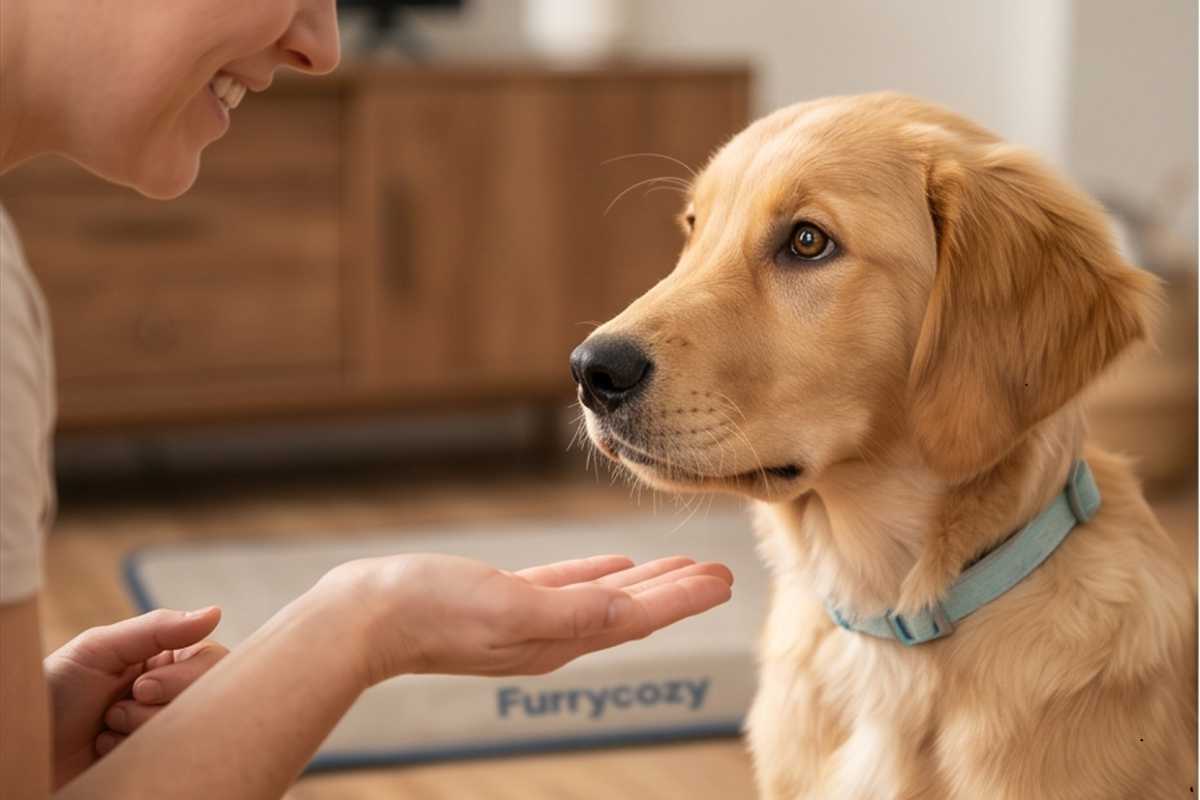
2. The “Touch” (Hand Targeting)
This is one of the most underrated dog training exercises.
Instead of pulling your dog or repeating commands, you guide them using their natural curiosity.
Steps:
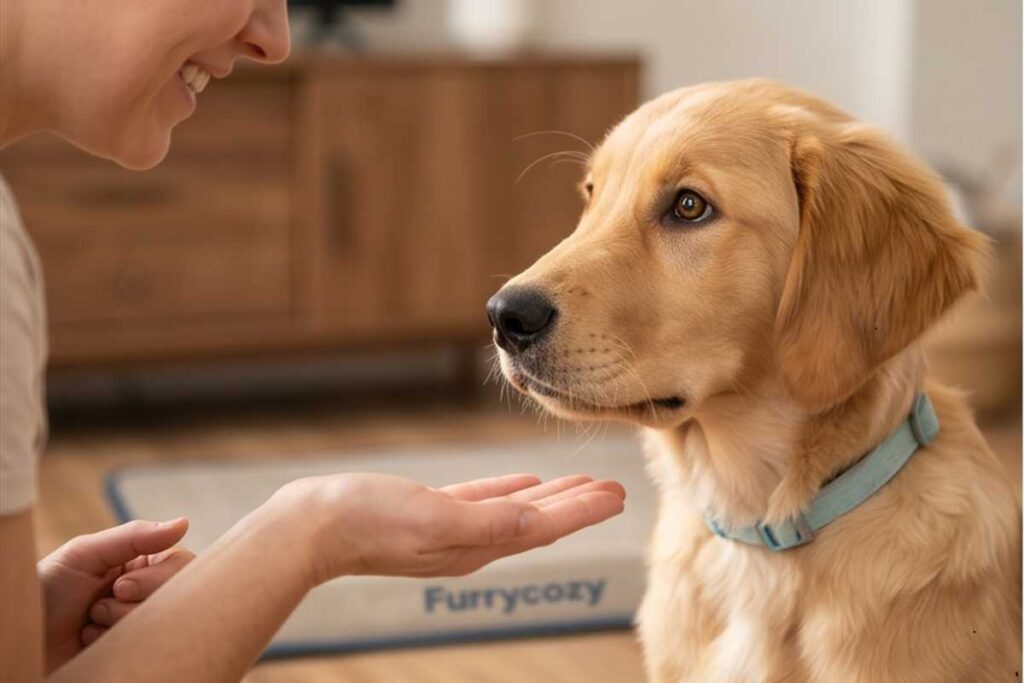
- Present your hand near your dog’s nose
- When they touch it, reward immediately
- Add the cue “Touch”
- Gradually move your hand to guide movement
Use cases:
- Redirecting attention
- Positioning your dog
- Improving recall
A comfortable harness makes this smoother, allowing your dog to move freely without neck pressure, keeping their focus where it belongs—on you.
Indoor Brain Games: Mental Training Exercises
Physical exercise is important—but mental stimulation is just as powerful. These dog training exercises are perfect for indoor days.
3. Hide and Seek (“Find It” Game)
Dogs LOVE using their nose.
How it works:
- Hide a toy or treat
- Say “Find it!”
- Let your dog search
Start easy, then increase difficulty.
This dog training exercise taps into natural instincts and keeps your dog mentally engaged.
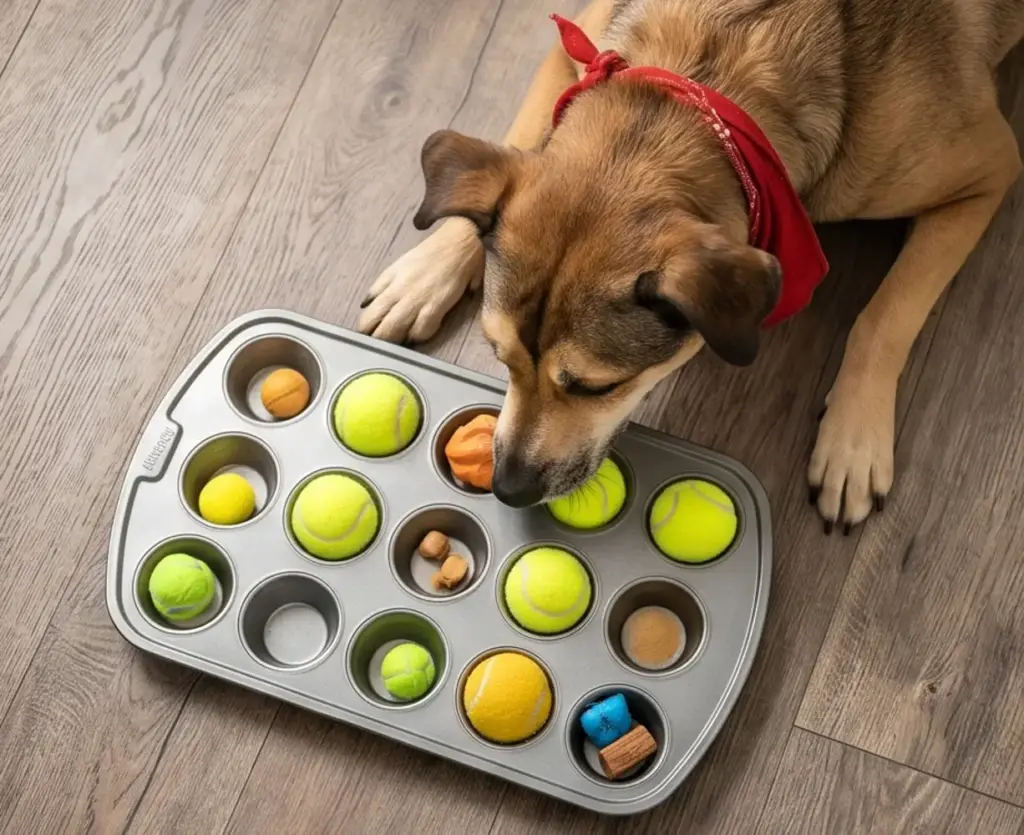
4. The Muffin Tin Puzzle
A simple DIY enrichment game.
What you need:
- Muffin tin
- Tennis balls
- Treats
Steps:
- Place treats in some cups
- Cover all cups with balls
- Let your dog figure it out
This type of dog training exercise builds problem-solving skills and prevents boredom.
5. The Name Game
Your dog’s name should be the best sound they hear all day.
How to train:
- Say their name once
- Reward immediately when they look at you
- Repeat in different environments
This strengthens recall and attention—two critical elements of all dog training exercises.
Outdoor & Agility-Light Exercises
Time to take training outside. These dog training exercises combine movement, structure, and real-world practice.
6. The “Stop-and-Go” Walk
Turn your daily walk into a training session.
How it works:
- Walk normally
- Stop suddenly and ask for “Sit”
- Reward calm behavior
- Continue walking
Repeat at curbs, corners, or distractions.
This teaches impulse control and transforms walks into productive dog training exercises.
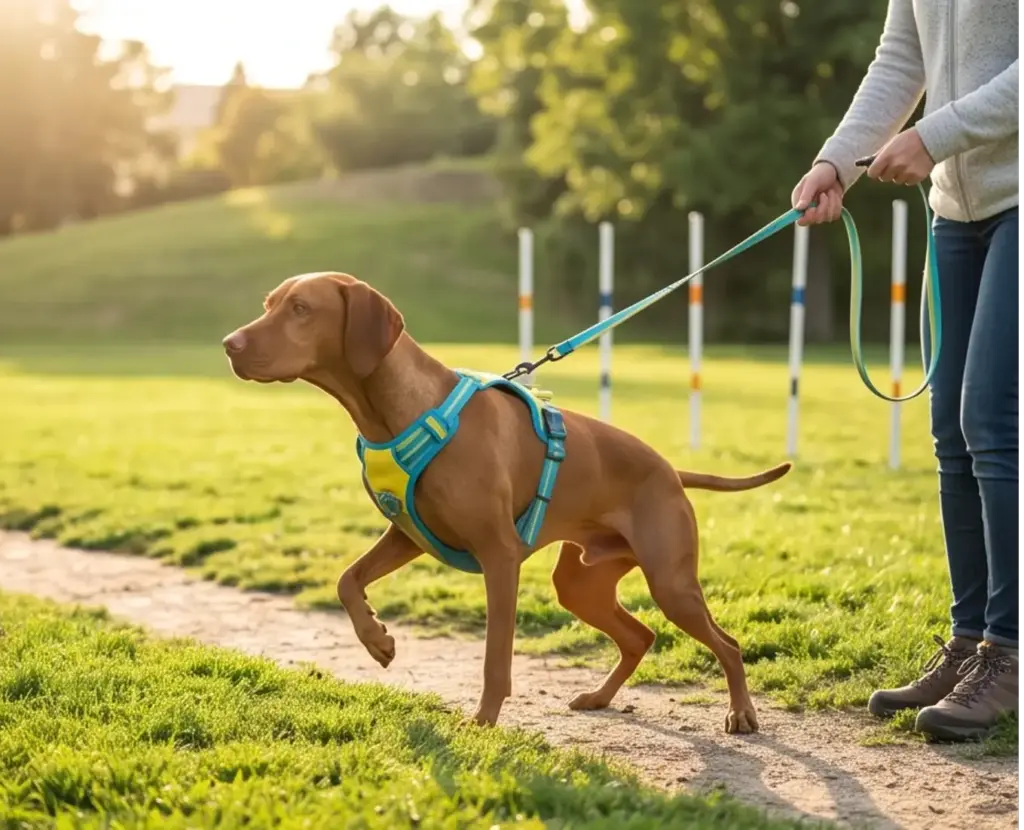
7. Backyard Slalom
Think of this as beginner agility.
Setup:
- Use cones, bottles, or objects
- Space them evenly
Goal:
- Guide your dog in a weaving pattern
Benefits:
- Improves coordination
- Builds body awareness
- Adds fun variety to dog training exercises
8. The Long-Lead Recall
Recall is one of the most important skills.
Steps:
- Use a long leash (10–20 ft)
- Let your dog explore
- Call their name + “Come”
- Reward heavily when they return
This dog training exercise builds trust while keeping your dog safe.
The “Cozy” Calm: Training for Relaxation
Not all dog training exercises are high-energy. Some of the most valuable ones teach your dog how to relax.
9. The “Place” Command
This teaches your dog to settle in a specific spot.
How to train:
- Guide your dog to a bed or blanket
- Say “Place”
- Reward calm behavior
- Gradually increase duration
This is especially helpful when:
- Guests arrive
- You’re eating
- You need your dog to relax
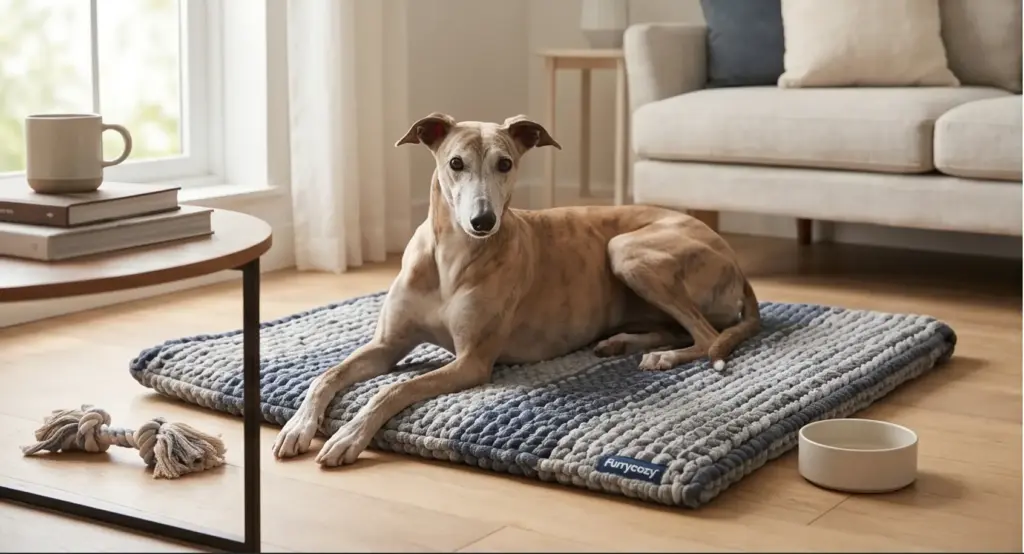
A designated blanket or mat can become a visual cue for calmness, helping your dog associate that space with safety and rest.
10. The Gentle Touch Exercise
Dogs need to be comfortable being handled.
Practice:
- Touch paws, ears, and tail gently
- Reward calm responses
- Keep sessions short and positive
This prepares your dog for:
- Vet visits
- Grooming
- Nail trimming
It’s one of the most practical dog training exercises you can do.
How to Make Dog Training Exercises Actually Work
Even the best exercises won’t help without the right approach.
Keep Sessions Short
- 5–10 minutes per session
- Multiple sessions per day
Short bursts keep your dog engaged and prevent frustration.
Use Positive Reinforcement
Reward what you want to see more of.
- Treats
- Praise
- Play
Avoid punishment—it damages trust and slows progress.
Be Consistent
Dogs learn through repetition.
- Use the same cues
- Practice daily
- Stay patient
Consistency turns simple dog training exercises into lasting habits.
Common Mistakes to Avoid
When doing dog training exercises, watch out for:
- Training too long (leading to burnout)
- Inconsistent commands
- Expecting instant results
- Skipping mental stimulation
- Not rewarding enough
Training is a process, not a one-time event.
Why Dog Training Is Really About Bonding
At its core, dog training exercises aren’t about control—they’re about communication.
Every session builds:
- Trust
- Understanding
- Emotional connection
Your dog isn’t just learning commands. They’re learning how to live with you, how to read you, and how to feel safe in your presence.
Conclusion: Small Moments, Big Results
The best part about dog training exercises? You don’t need hours.
Just a few minutes a day can:
- Improve behavior
- Reduce stress
- Strengthen your bond
Training becomes part of your lifestyle—woven into walks, playtime, and quiet moments at home.
Stay patient. Stay consistent. And most importantly, keep it fun.
Ready to level up your bond?
Explore the “Training & Play Collection” at www.furrycozy.com and make every session count.







RECENT COMMENTS