


Dog conditioners can reduce tangles and dryness when used right. See ingredients, coat types, and bathing steps that protect skin.
dog conditioners can make brushing easier and help a dry, dull coat look healthier when you choose the right formula and rinse well.
They’re not “just for looks.”
A well-matched conditioner can reduce static, limit matting, and protect the skin barrier, especially in colder months or dry indoor air.
But the wrong product—or a rushed rinse—can leave residue that triggers itching.
This article breaks down when conditioners help, what to avoid, and how to build a simple routine that matches your dog’s coat.
When dog conditioners help and when dog conditioners hurt
Conditioner helps when your dog’s coat tangles easily, feels rough after shampooing, or breaks during brushing.
Conditioner hurts when it’s heavy for the coat type, applied too close to the skin, or not rinsed fully.
If your dog already has inflamed skin, persistent dandruff, or open sores, talk to a vet before adding new products.
For many dogs, the safest approach is a gentle shampoo and a light conditioner used only on the coat lengths.
Coat type decides almost everything
Choosing a product without considering coat type is the fastest path to greasy fur or itchy skin.
Use this as a quick map.
- Short, smooth coats (beagle, boxer): light formulas, minimal leave-on time
- Double coats (husky, shepherd): rinse-friendly formulas that won’t trap undercoat oils
- Curly coats (poodle mixes): detangling focus, extra slip for brushing
- Long coats (shih tzu, yorkie): anti-matting focus, careful rinsing and comb-through
If you’re unsure which category fits, your groomer can tell you in one visit.
Ingredients to look for (and why they matter)
You don’t need a chemistry degree.
Just watch for a few families of ingredients.
Humectants like glycerin can help the coat hold moisture, especially if your home air is dry.
Oat or aloe can feel soothing for mildly sensitive skin, but “natural” doesn’t guarantee allergy-safe.
Ceramides and fatty acids can support the skin barrier in dogs prone to flaking.
Silicones (like dimethicone) add slip and shine.
They’re not automatically bad, but they can feel heavy on fine coats if overused.
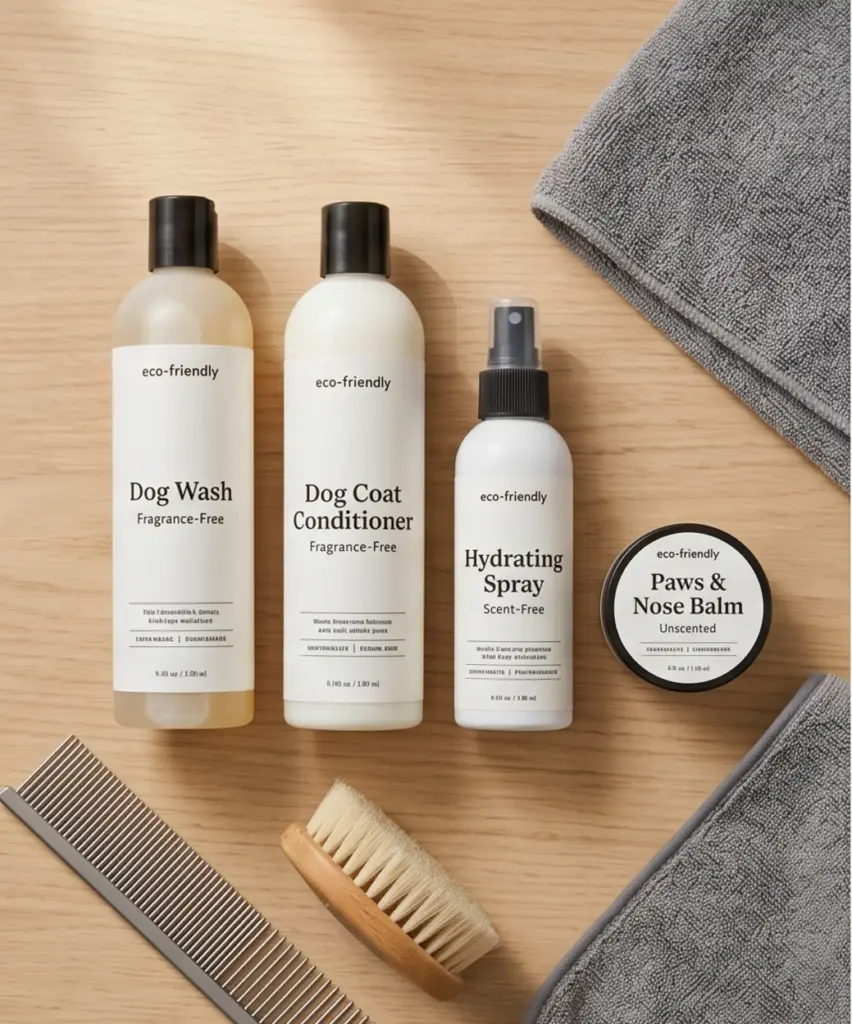
Fragrance is the most common problem ingredient.
If your dog is itchy after bathing, switch to fragrance-free first.
What to avoid if your dog is itchy
If your dog scratches right after grooming, simplify.
Avoid:
- Strong perfumes or “cologne” scents
- Products labeled for humans
- Essential oil-heavy formulas (tea tree, clove, cinnamon)
- Leave-in sprays that build residue without a rinse
If you suspect a product reaction, rinse with lukewarm water for several minutes and stop using that product.
How to use conditioner correctly (step-by-step)
Most problems come from technique, not the bottle.
- Brush out loose hair before the bath so tangles don’t tighten when wet.
- Shampoo first, focusing on dirty areas, and rinse until the water runs clear.
- Apply conditioner to the coat lengths, not directly on the skin.
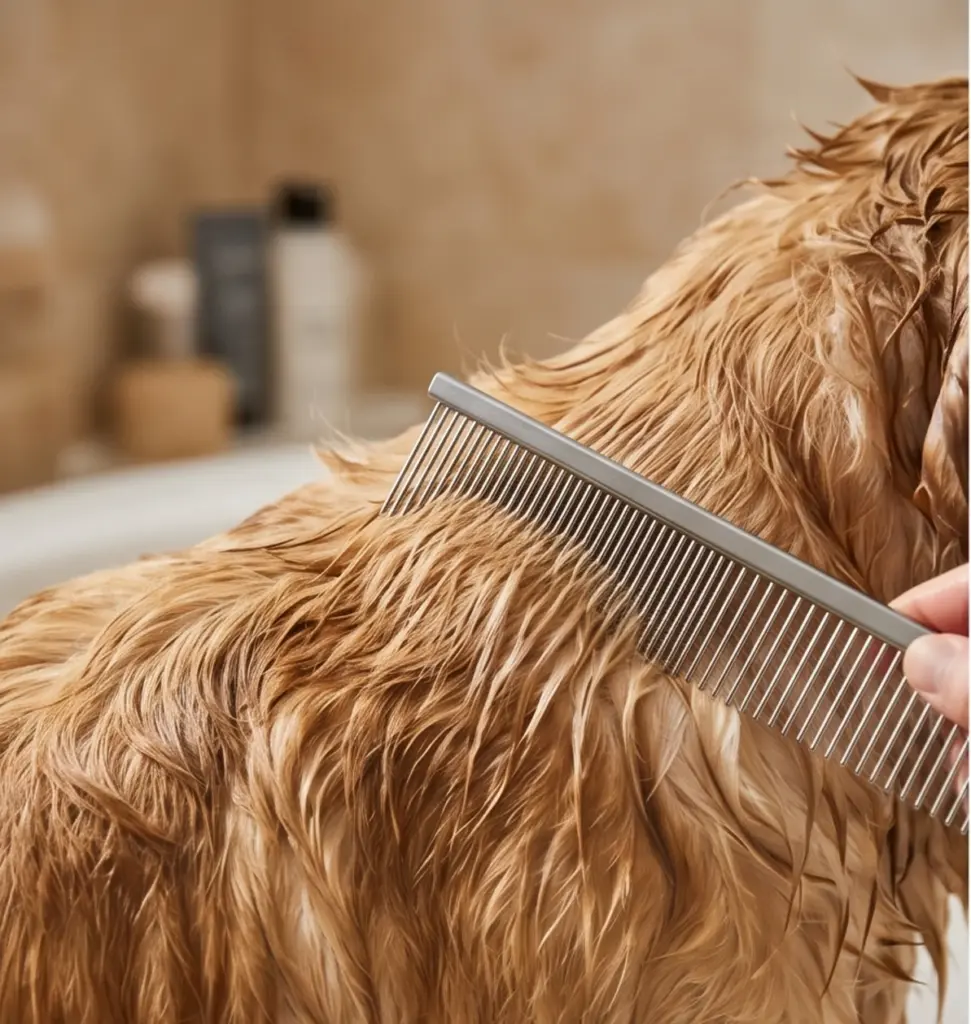
- Work it through with your fingers or a wide-tooth comb for even coverage.
- Follow the label timing, then rinse longer than you think you need.
- Towel blot (don’t rub hard), then dry fully.
If your dog air-dries while damp at the skin, that moisture can worsen odor and irritation.
Rinsing: the non-negotiable step
Conditioner residue is a common cause of “my dog is itchy after a bath.”
Rinse until the coat feels squeaky-clean at the roots.
Then rinse another 30–60 seconds.
For thick coats, separate the fur with your fingers while rinsing so water reaches the undercoat.
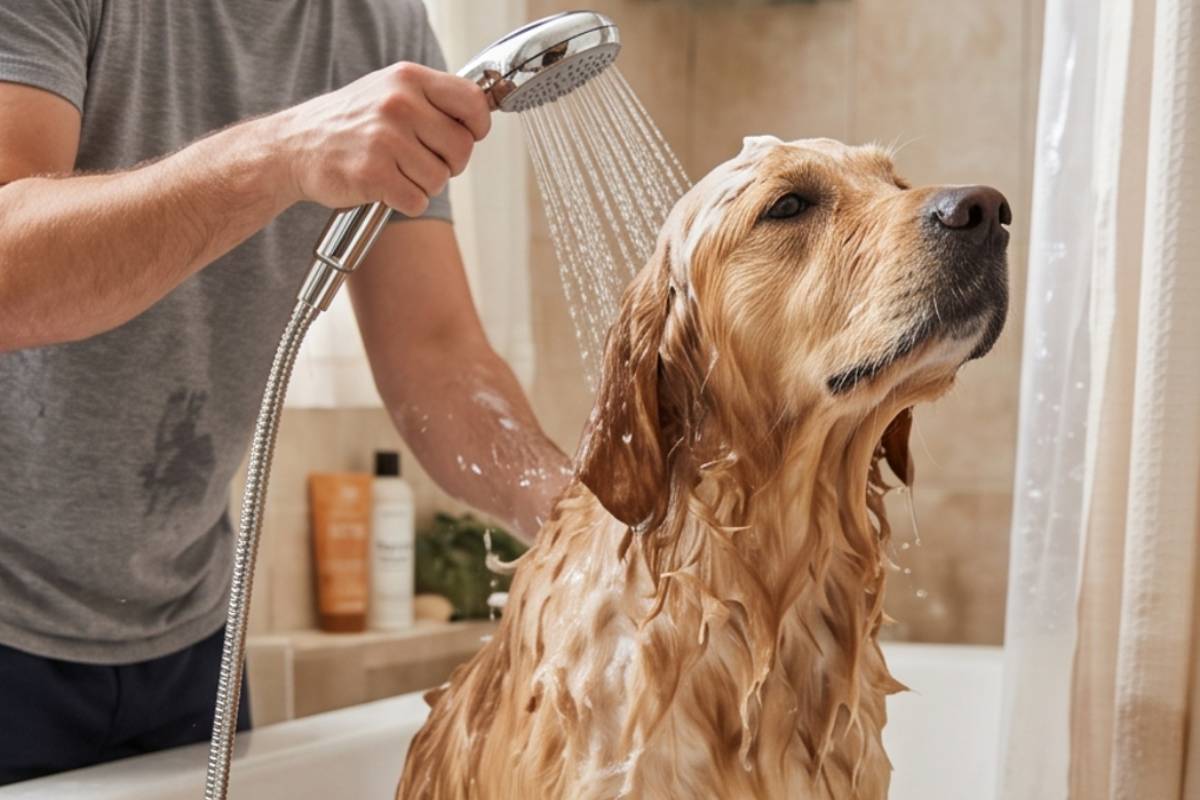
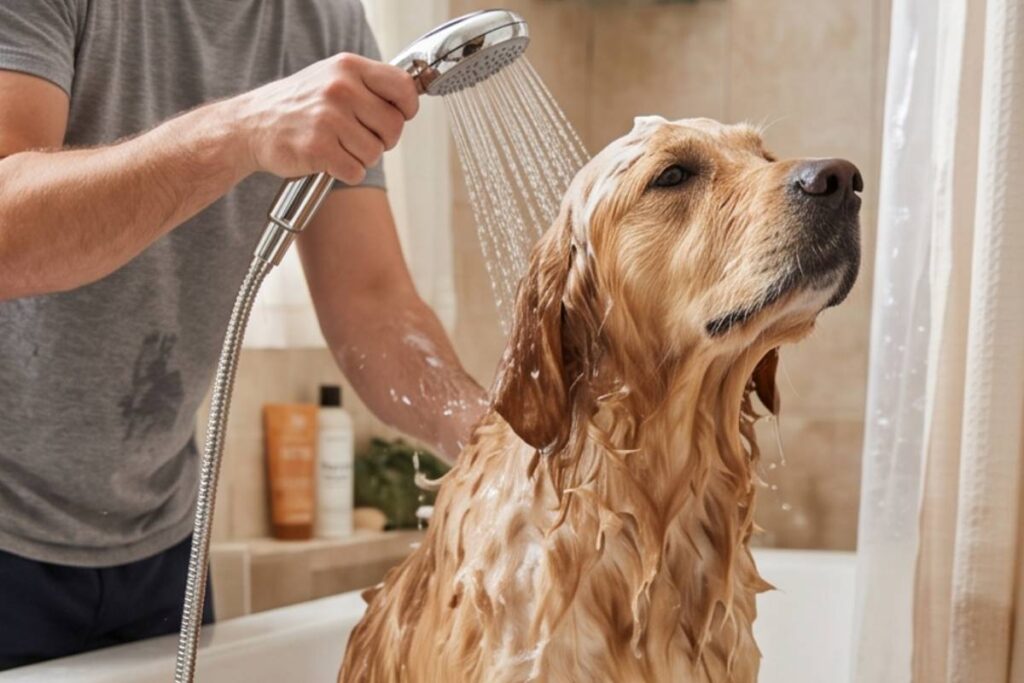
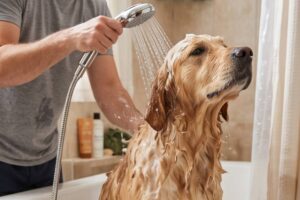
If you use a detachable shower head, use moderate pressure.
Too much pressure can startle dogs and make bath time stressful.
How often should you condition?
More is not always better.
For most household dogs, conditioning every other bath is enough.
If your dog swims often or gets frequent baths, a light conditioner can help prevent coat dryness.
If your dog is oily, reduce conditioner frequency and keep it only on the tail, legs, and feathering.
If your dog is prone to mats, conditioning can be helpful, but brushing habits matter more.
A quick weekly brush beats a heavy product routine.
Comparison table: picking the right formula
| Dog situation | Better choice | Why | Watch-outs |
|---|---|---|---|
| Dry, dull coat | Moisturizing conditioner | Adds slip + softness | Avoid heavy fragrance |
| Frequent bathing | Lightweight conditioner | Reduces dryness from washing | Rinse thoroughly |
| Matt-prone coat | Detangling formula | Helps comb glide | Don’t skip brushing |
| Sensitive skin | Fragrance-free, vet-approved | Low irritation risk | Patch test first |
| Oily coat | Minimal or spot-conditioning | Prevents greasy feel | Keep off skin |
Brush pairing: conditioner + tools
Conditioner helps most when your tools match the coat.
A slicker brush works for many coats, but it can irritate if used aggressively.
A stainless-steel comb is great for checking whether you truly removed tangles.
If you’re building your toolkit, start simple and upgrade only if you need it.
You can also compare your setup to dog grooming tools so you’re not buying duplicates.
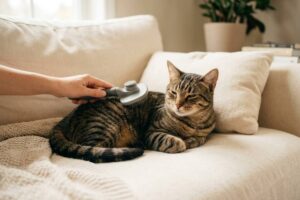
For multi-pet homes, cat grooming tools can overlap (like combs), but avoid sharing products between species.
Bath-time stress and behavior
Some dogs act itchy after bathing because they’re anxious, not because the product is wrong.
They roll, rub their face, and sprint around the house.
If that behavior lasts only a few minutes and your dog’s skin looks normal, it may be a stress release.
Use calm handling, lukewarm water, and a predictable routine.
If your dog struggles most when you leave the room to get supplies, prep everything first.
For dogs with broader anxiety patterns, it can help to revisit dog separation anxiety management so bath time doesn’t feel like isolation.
Quick routine for busy owners (10 minutes after the bath)
You don’t need salon-level steps.
- Towel blot, then use a dryer on low heat if your dog tolerates it
- Brush the coat in sections while it’s almost dry
- Check friction areas: collar line, armpits, behind ears
- Reward calm behavior so grooming stays neutral or positive
If you’re doing grooming before a trip, keep gear together and pair it with your travel routine.
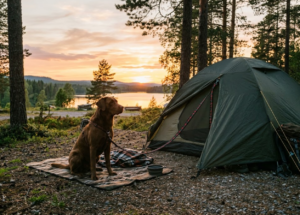
This is especially useful if you’re packing dog camping gear and want your dog comfortable and knot-free.
Patch test: a simple way to avoid surprises
If your dog has a history of allergies, do a quick patch test.
Apply a tiny amount of diluted product to a small coat area, rinse, and wait 24 hours.
If you see redness, bumps, or intense scratching, skip that formula.
This won’t catch every reaction, but it reduces the odds of a full-body flare after a bath.
Water temperature and drying matter more than most people think
Hot water strips oils and can make dry skin worse.
Use lukewarm water and keep baths short.
After rinsing, dry the coat all the way to the roots.
A damp undercoat can trap moisture and lead to odor, hotspots, and itching.
If your dog hates dryers, towel blot thoroughly and use a warm room plus a calm brush-out.
FAQ
Q1: Should I use conditioner on my dog’s skin?
A: Usually no—apply it to the coat lengths and avoid direct skin application unless a vet-directed product specifically says otherwise.
Q2: Why is my dog itchy after I condition?
A: The most common causes are residue from incomplete rinsing or irritation from fragrance; rinse longer and switch to fragrance-free.
Q3: Can I use human conditioner on my dog?
A: No—human products can disrupt canine skin pH and may contain fragrances or additives that increase irritation risk.








RECENT COMMENTS