
What to Feed a Senior Cat That Keeps Throwing Up

What to Feed a Senior Cat That Keeps Throwing Up

Is your senior cat vomiting frequently? If you’re wondering what to feed a senior cat that keeps throwing up,check vet-approved diet solutions and when to seek medical help
Watching your senior cat vomit repeatedly is heartbreaking. Did you know that 60% of cats over the age of 12 develop digestive issues? (Source: Cornell Feline Health Center). Vomiting in older cats can be a sign of an underlying health problem, a poor diet, or simple digestive sensitivity. In this guide, we will explore what to feed your senior cat that keeps throwing up, what foods to avoid, and when to seek veterinary help.
Why Senior Cats Vomit: 5 Common Causes
Before changing your cat’s diet, it is essential to understand why they might be vomiting. Here are five common causes:
Kidney Disease
Chronic kidney disease (CKD) affects many older cats and often leads to nausea and vomiting. The kidneys lose their ability to filter toxins, which can cause gastrointestinal distress (Source: American Association of Feline Practitioners).
Food Allergies and Sensitivities
Some cats develop allergies to proteins in their food, such as chicken or beef. These allergies can cause vomiting, diarrhea, and skin irritation.
Hairballs
Older cats groom themselves more frequently, leading to an increased risk of hairballs, which can cause frequent vomiting.
Inflammatory Bowel Disease (IBD)
IBD is a chronic condition that causes inflammation in the intestines, leading to vomiting, diarrhea, and weight loss (Source: Journal of Feline Medicine, 2023).
Dietary Indiscretion
Senior cats may accidentally consume spoiled food or non-food items that irritate their stomachs, causing vomiting.
What to Feed a Senior Cat That Keeps Throwing Up
Choosing the right diet can significantly improve your cat’s health. Here are three vet-approved options:
Prescription Digestive Care Food
Veterinary diets such as Royal Canin Gastrointestinal or Hill’s Prescription Diet i/d are formulated to be easy on a cat’s stomach. They contain highly digestible ingredients and limited fat content to reduce vomiting.
Hydration-Focused Wet Food
Cats with vomiting issues often suffer from dehydration. Wet food with over 80% moisture content is highly recommended. Brands like Weruva Wx Grain-Free provide hydration and easy digestibility.
Homemade Bland Diet
For a short-term solution, a homemade bland diet can help settle your cat’s stomach. A simple recipe includes:
- 3 parts boiled chicken breast (no seasoning)
- 1 part pumpkin puree (rich in fiber to aid digestion)
Warning: Never include onions, garlic, or seasonings as they are toxic to cats (Source: ASPCA).
Foods to Avoid Immediately
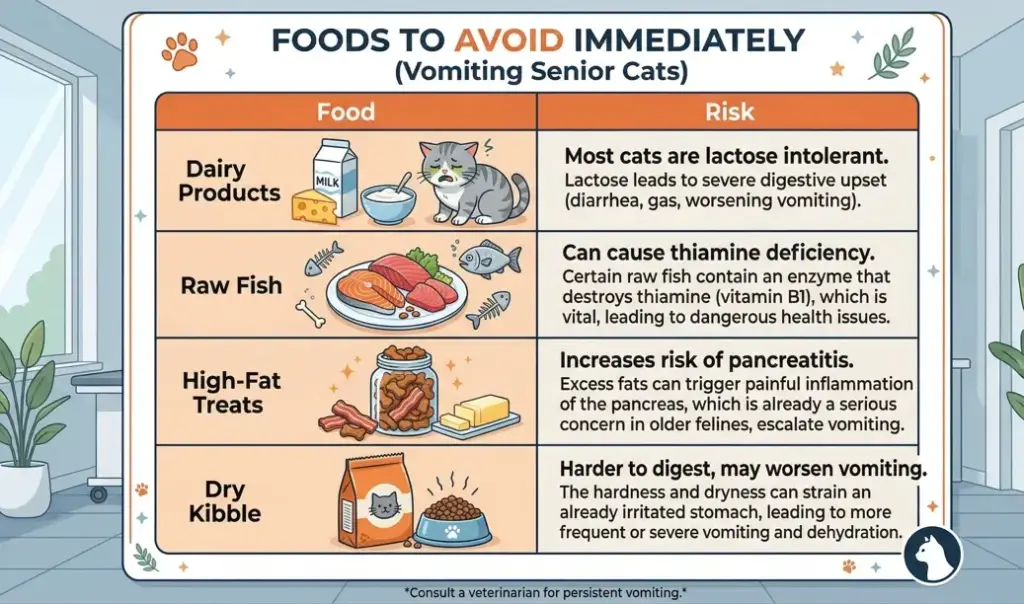
Certain foods can worsen vomiting in senior cats. Here’s a quick list of common culprits:
| Food | Risk |
|---|---|
| Dairy Products | Most cats are lactose intolerant |
| Raw Fish | Can cause thiamine deficiency |
| High-Fat Treats | Increases risk of pancreatitis |
| Dry Kibble | Harder to digest, may worsen vomiting |
When to See a Vet: 3 Red Flags
While occasional vomiting can be normal, persistent issues require medical attention. Look out for these warning signs:
- Vomiting blood or bile – This may indicate ulcers or internal bleeding.
- Lethargy lasting more than 24 hours – A sign of serious illness.
- Weight loss exceeding 10% of body weight – Indicates a chronic health condition.
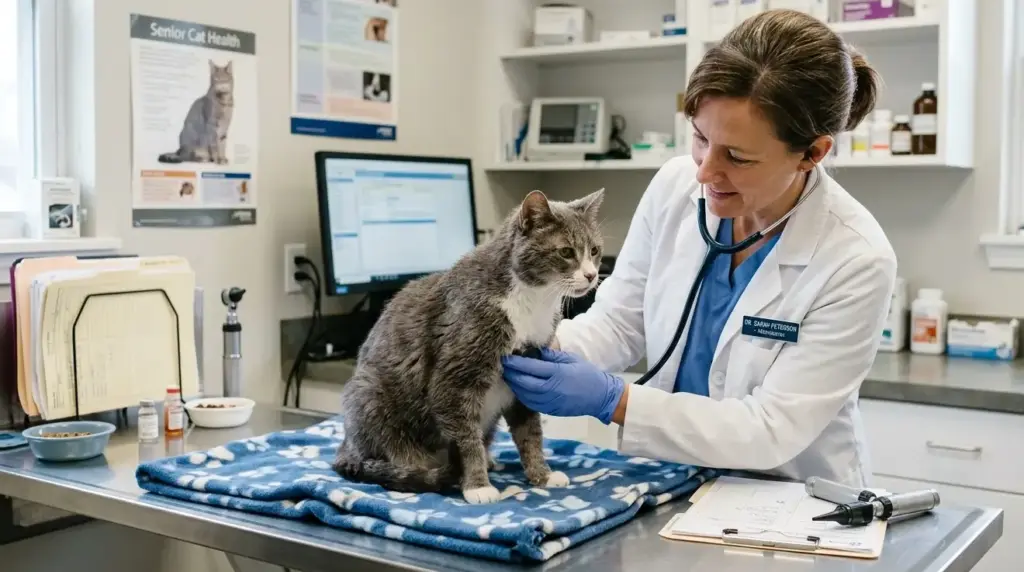
Cat Food Safety Guide by Age Group
| Age Group | Recommended Healthy Foods | High-Risk Dangerous Foods | Special Considerations |
|---|---|---|---|
| Kittens (0-12 months) | Animal Protein: Minced chicken breast, kitten formula (lactose-free) Calcium & Phosphorus Source: Kitten calcium supplements, cooked egg yolk Energy Boost: Goat milk powder, complete kitten wet food | Cow’s Milk: Causes diarrhea due to lactose intolerance Raw Meat/Fish: Risk of salmonella infection Large Hard Foods: Choking hazard | •Requires mother’s milk or specialized formula until 4 weeks old • Needs 4-6 meals per day • Avoid high-fiber foods (may hinder nutrient absorption) |
| Adult Cats (1-7 years) | High-Quality Protein: Cooked poultry, beef, salmon Dietary Fiber: Pumpkin puree (helps with hairballs) Functional Treats: Freeze-dried liver (rich in vitamin A) | Onions/Garlic: Destroys red blood cells, leading to anemia Chocolate: Theobromine poisoning (causes vomiting, seizures) Alcoholic Beverages: Toxic at just 0.5ml/kg | • Control fat intake to prevent obesity • Avoid single protein sources for extended periods (reduces allergy risk) • Neutered/spayed cats need lower-calorie diets |
| Senior Cats (7+ years) | Low-Phosphorus Protein: Turkey, rabbit (kidney-friendly) Joint Support: Green-lipped mussel, bone broth (fat-free) Easy-to-Digest Carbs: Rice porridge, steamed carrot puree | High-Sodium Foods: Accelerates kidney disease Grapes/Raisins: Causes acute kidney failure Xylitol: Can trigger hypoglycemic shock | • Prioritize wet or semi-liquid food • Supplement Omega-3 with Vitamin E for balance • Avoid high-magnesium foods (prevents urinary stones) |
Universal Dangerous Foods for All Ages
Highly Toxic:
- Lilies (all parts, especially pollen)
- Caffeine (tea, coffee, energy drinks)
- Macadamia nuts (causes neurological damage)
High-Risk:
- Yeast Dough (causes bloating + alcohol poisoning)
- Human Medications (e.g., ibuprofen, acetaminophen)
- Fruit Pits (cyanide poisoning, e.g., apple seeds)
Feeding Progression Guide
Kittens: 🍼 → 🐣 → 🐟 (Liquid → Puree → Small Solid Pieces)
Adults: 🥩 + 🎃 + 💧 (High Protein + Fiber + Hydration)
Seniors: 🥣 + 🦪 + 💊 (Soft Food + Joint Support + Disease Management)
Notes:
- Pregnant/lactating cats require 30% additional calorie intake.
- Recommended amounts are based on healthy cats; adjust for medical conditions as advised by a veterinarian.
- When introducing new food, monitor bowel movements for 72 hours.
Conclusion & Next Steps
A well-balanced diet tailored to your senior cat’s needs can help reduce vomiting and improve their overall well-being. To summarize:
- Try vet-recommended foods like prescription diets or homemade bland meals.
- Avoid trigger foods like dairy, raw fish, and fatty treats.
- Monitor for warning signs and consult a vet if symptoms persist.
Join the conversation! Have you found a food that works for your senior cat? Share your experience in the comments!









RECENT COMMENTS