
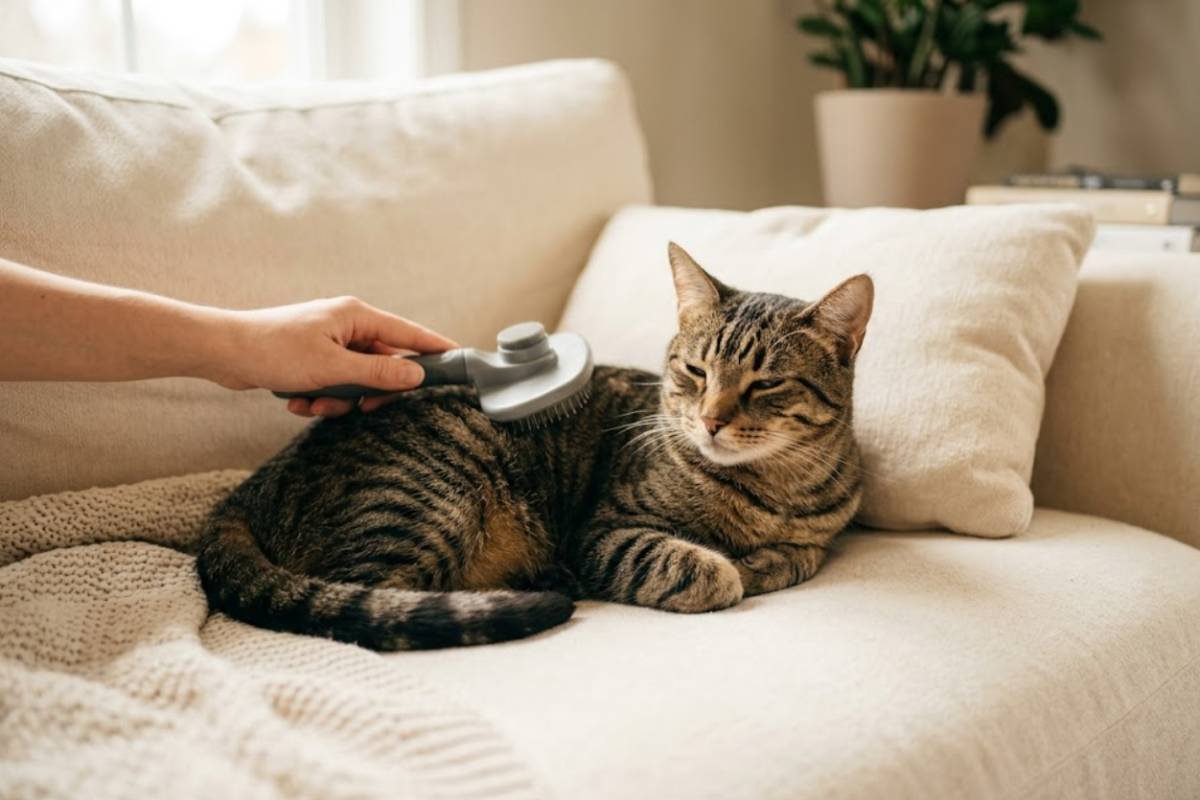


Cat grooming tools for gentle shedding control and easy detangling, helping keep coats smooth, reduce hairballs, and keep homes cleaner at home.
Cat grooming tools: a practical kit for less shedding and fewer mats
cat grooming tools work best when they fit your cat’s coat, skin, and patience.
A tidy coat isn’t just cosmetic.
When loose hair and small knots build up, cats can get uncomfortable fast—and your home shows it.
We focuses on simple tools, gentle technique, and routines that stay realistic on busy days.
You don’t need a drawer full of gadgets.
You need a small set that covers daily brushing, quick knot checks, nail maintenance, and light cleanups.
The problems you’re actually trying to solve at home
Most grooming headaches fall into a few repeat categories.
Shedding control is about lifting loose hair before it lands on furniture.
Detangling is about finding friction spots early, before they become painful mats.
Nail care is about safety and comfort—for paws, people, and floors.
Hygiene touch-ups are about removing grime without irritating skin or eyes.
If a session turns into a chase, the tool or the timing is usually wrong.
Coat length changes everything (and it’s not just “short vs long”)
Short coats often shed fine hair that clings to fabric and bedding.
Medium coats tend to tangle in high-rub zones like armpits and the belly.
Long coats can hide tight knots close to the skin even when the top looks smooth.
Plush or curly coats may trap debris and benefit from gentler, more frequent checks.
If your cat flinches, the pressure may be too high—or the tool teeth may be too sharp.
How to choose cat grooming tools: cat grooming tools that match coat type
Think of each tool as “controlled friction.”
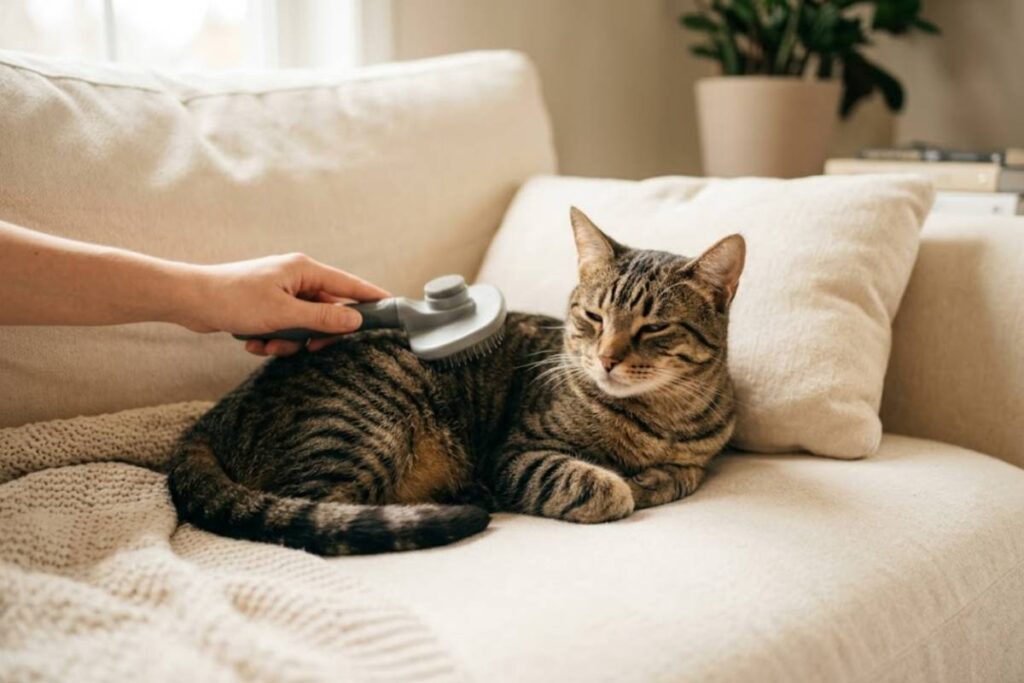
Brushing spreads oils and lifts loose hair without pulling.
Combing separates strands so you can spot knots early and work them out safely.
Undercoat tools can remove lots of fluff, but overuse can scrape and create sensitivity.
Cutting tools should be a last resort, because the skin under a mat can be easy to nick.
A quick comparison table
| Situation at home | Best everyday pick | Use sparingly | Why it helps |
|---|---|---|---|
| Light shedding, short coat | Rubber brush or soft slicker | Undercoat rake | Lifts loose hair with low irritation |
| Early tangles, medium coat | Comb check + soft slicker | Dematting cutter | Finds knots before they tighten |
| Prone to mats, long coat | Wide-tooth then narrow comb | Heavy deshedding blade | Separates layers without yanking |
| Sensitive skin or senior cat | Glove or rubber brush | Stiff pins | Reduces scratchy pressure |
The minimal kit that covers 90% of routines
A small kit is easier to keep consistent.
Consistency is what keeps knots from turning into “one painful big session.”
Here’s a practical baseline you can build around:
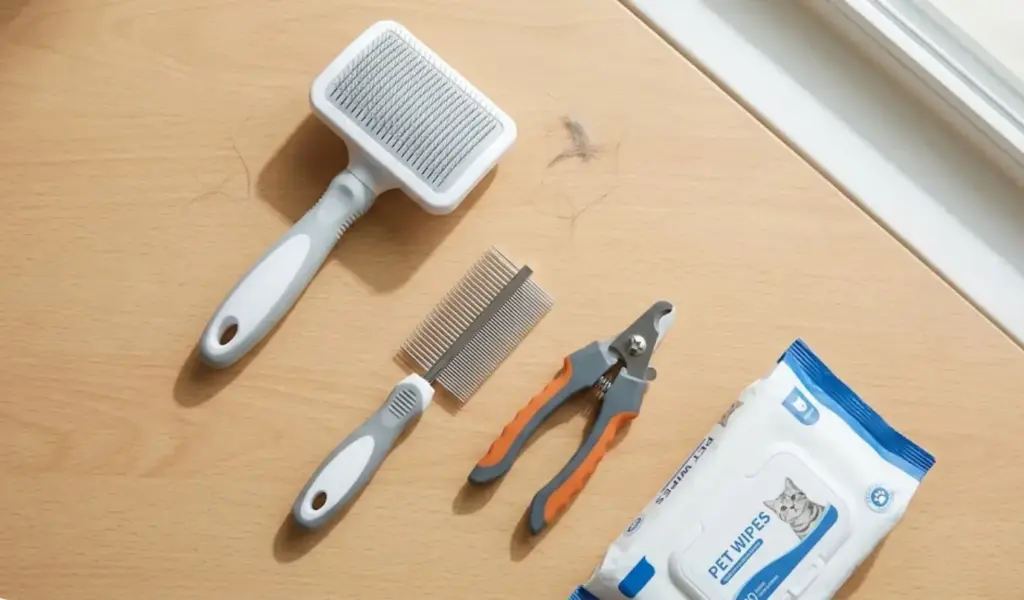
- A soft slicker brush with flexible pins
- A stainless-steel comb with wide and narrow sections
- Pet nail clippers or a low-noise nail grinder
- Pet-safe wipes for eyes, paws, and rear
- Optional: a grooming glove for brush-shy cats
If you’re shopping for Grooming and Care items, prioritize comfort over “maximum hair removal.”
Brush details that make a picky cat tolerate grooming
Pin tips matter more than marketing.
Rounded or capped tips feel kinder on sensitive cats.
A smaller brush head makes it easier to avoid poking bony areas like legs and shoulders.
Handle comfort matters, too.
When your wrist gets tired, you press harder without noticing—and your cat notices.
Combs: the quiet MVP for knot prevention
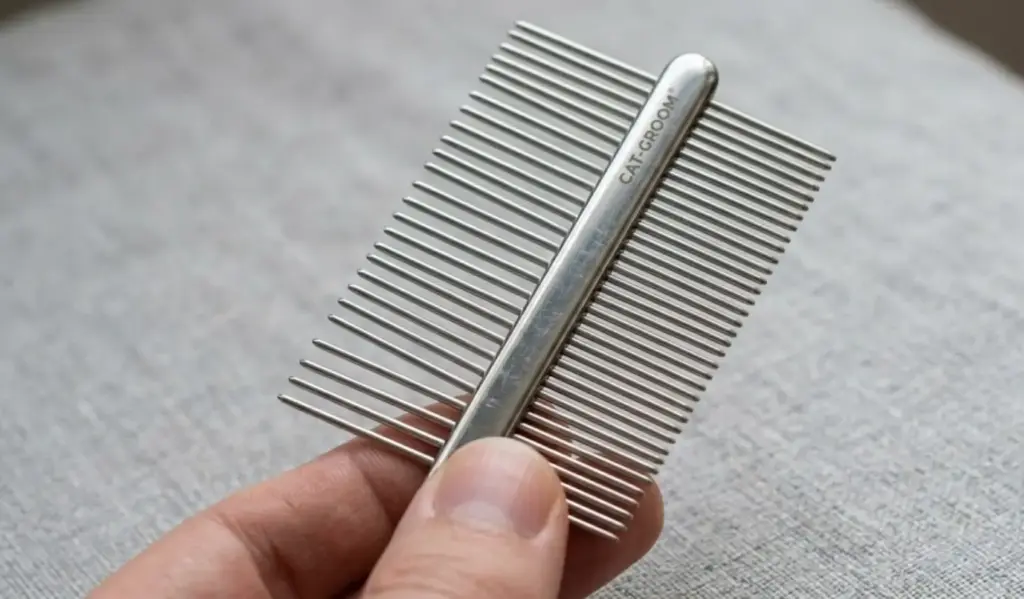
A comb is your early-warning system.
Use the wide teeth to glide through and map out where snagging starts.
Switch to the narrow teeth only after the coat is already moving freely.
Go slow around armpits, behind the ears, and the belly.
Those zones mat first because they rub while walking, jumping, and sleeping.
For targeted tools, keep an eye on Flea combs and hygiene tools that also work for debris checks.
Deshedding tools: powerful, but easy to overdo
Undercoat tools can be helpful during seasonal shed cycles.
They can also create redness if used daily or with heavy pressure.
Limit sessions, watch the skin, and stop early if your cat’s tolerance drops.
If you see dandruff, bald spots, or nonstop itching, treat it as a health signal—not a grooming challenge.
Detangling without drama (and without yanking)
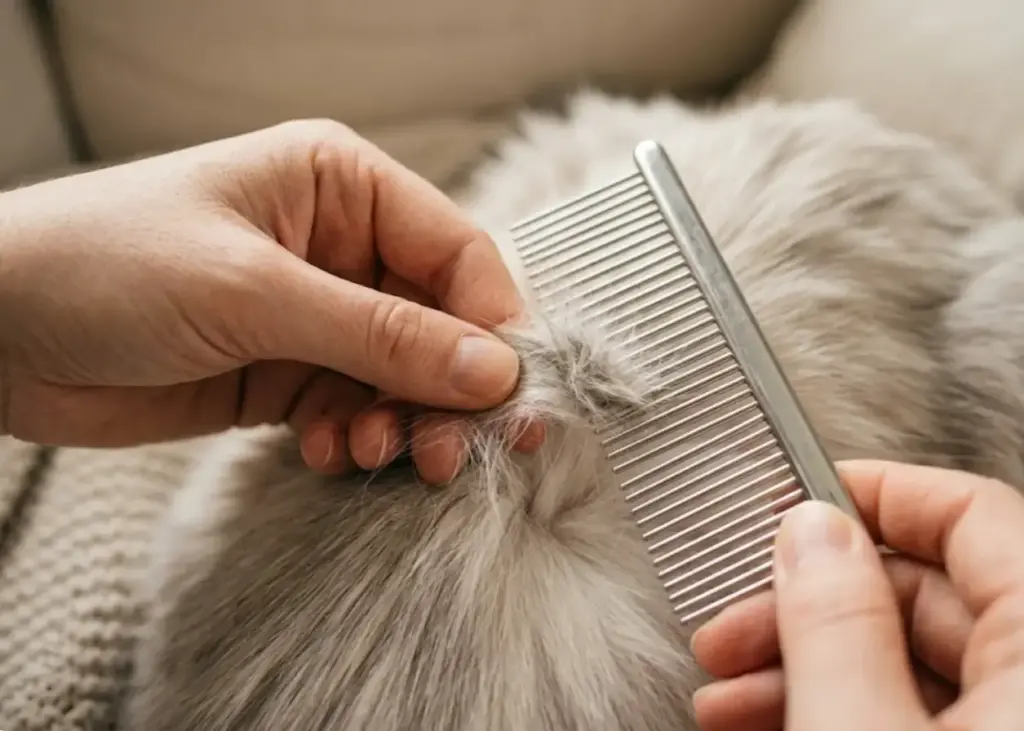
Never pull a knot straight out.
Hold the fur at the base with your fingers so the skin doesn’t stretch.
Work the comb from the end of the tangle toward the base, a few millimeters at a time.
If a mat is tight to the skin, don’t fight it at home.
A professional groomer or a vet can remove it more safely than force and frustration.
Nail care that doesn’t ruin the relationship
Bright light helps you avoid the quick.
For dark nails, take tiny trims and pause often.
Reward after each paw, not only at the end.
If your cat panics, try a “one nail a day” plan until handling feels normal.
Short, calm reps beat one long session that ends in a struggle.
For more everyday care routines, Pet Daily Care Wellness articles can help you build habits that stick.
Wipes and small cleanups that keep the house fresher
Wipes are for quick, low-stress cleanup.
They help with litter dust on paws and light grime around the rear.
For eyes, use gentle strokes and stop if you see redness or swelling.
Avoid strong fragrances.
If it smells “clean,” it can still be irritating to cats.
A routine your cat can predict (and accept)
Pick two anchor moments in the day.
After breakfast and before your bedtime are common wins.
Keep tools within a 10‑second reach so you don’t skip sessions.
Aim for 3–5 minutes, then stop while your cat is still calm.
Ending on a calm note is how you get cooperation next time.
This is where cat grooming tools pay off most: when the routine is frequent and low-pressure.
Handling tactics that reduce resistance
Start in a familiar spot.
A towel on the couch or a specific chair can become a “grooming station.”
Brush with the direction of hair growth first.
Use shorter strokes on the chest, legs, and belly.
Pause often and let your cat reset.
If your cat walks away, let them.
The fastest way to create fear is turning grooming into restraint practice.
Common mistakes that create grooming dread
Pressing too hard is the big one.
The second is waiting until mats are painful, then trying to fix everything in one sitting.
The third is switching tools constantly.
Cats do better when sessions feel predictable.
Keep the kit steady, and change one variable at a time.
When it’s smarter to call a vet or groomer
Sudden heavy shedding can point to stress, parasites, or medical issues.
Skin odor, swelling, or open sores should never be “handled with more brushing.”
Older cats may avoid grooming because of arthritis or mobility pain.
If your cat is overweight, knotting on the belly can be a reach problem, not a coat problem.
When mats are tight to the skin, professional removal is safer than scissors at home.
If you’re building your routine library, Pet Grooming Care and Pet Care Hub can keep related tips in one place.
Wrap-up
A calmer coat starts with shorter sessions, better timing, and a small kit that matches the coat in front of you.
Pick tools that your cat tolerates, not tools that look extreme.
With steady habits, shedding becomes manageable and tangles get caught early.
FAQ
Q1: How often should I groom my cat at home?
Most cats do best with brief sessions on a predictable schedule: 1–2 times weekly for many short coats, and quick daily checks for medium or long coats.
Q2: What’s the gentlest way to deal with small tangles?
Hold the fur at the base, then comb from the end of the tangle inward in tiny steps; stop early if the knot is tight to the skin.
Q3: Does grooming help with hairballs?
Regular brushing removes loose fur before it gets swallowed, which can reduce the amount of hair a cat has available to form hairballs.







RECENT COMMENTS