
Essential Cat First Aid: A Complete Guide for Pet Parents

Essential Cat First Aid: A Complete Guide for Pet Parents

Accidents happen in a heartbeat. Learn essential cat first aid and how to give first aid to a cat during emergencies to keep your feline friend safe.
Every pet parent knows that life with a feline friend is filled with joy, purrs, and the occasional zoomie. However, as much as we wish our cats lived in a world made of soft yarn and safe heights, accidents can happen in the blink of an eye. Whether it’s a curious nibble on a toxic leaf or a sudden tumble from a shelf, knowing the basics of cat first aid can be the difference between a minor scare and a heartbreaking tragedy.
When an emergency strikes, time is your most precious resource. In the veterinary world, we often talk about the “Golden Hour”—the critical window where immediate action can significantly improve the chances of a full recovery. This guide is designed to empower you, providing the knowledge you need on how to give first aid to a cat before you can reach professional help. At Furrycozy, we believe that being a pet parent is about more than just providing a beautiful home; it’s about being prepared for every twist and turn of their nine lives.
The Mindset of a First Responder: Stay Calm and Safe
The very first rule of cat first aid isn’t about bandages or medicines; it’s about your internal state. Cats are incredibly intuitive creatures. If you are panicking, your cat will pick up on that energy, causing their own stress levels (and blood pressure) to skyrocket.
Protect Yourself First
It sounds harsh, but a wounded or terrified cat is a dangerous cat. Even the sweetest “lap cat” may bite or scratch when they are in pain. This is a survival instinct, not a sign of aggression. Before you attempt to help, ensure you are safe.
- The Towel Wrap (The “Purrito”): Use a thick towel to gently wrap your cat, leaving only the head or the injured area exposed. This prevents scratches and keeps them immobile.
- Muzzling (The Last Resort): If necessary, a thick cloth can be used as a makeshift muzzle, but never do this if the cat is vomiting or having trouble breathing.
Assessing the Situation
Take a deep breath and look for the “ABCs”:
- A – Airway: Is there anything blocking their throat?
- B – Breathing: Is their chest rising and falling?
- C – Circulation: Do they have a pulse? Is their gum color pink (healthy) or blue/pale (emergency)?
Common Emergencies: How to Give First Aid to a Cat
Understanding how to give first aid to a cat requires specific knowledge for different scenarios. Here are the four most common emergencies pet parents face in Western households.
Scenario A: Choking and Respiratory Distress
Cats are naturally curious, and sometimes that curiosity leads them to swallow small toy parts, strings, or even pieces of high-end jewelry.
- The Signs: Pawing at the mouth, blue-tinged tongue, or frantic gasping.
- What to do: Open the mouth gently. If you see a clear object, try to remove it with blunt tweezers. Warning: If you see a string or thread, never pull it. It may be anchored deep in the digestive tract, and pulling could cause fatal internal tearing. If you cannot remove the object, perform a modified Heimlich maneuver by applying quick, gentle pressure to the abdomen just below the ribs.
Scenario B: Bleeding and Wounds
Whether it’s a cut from a broken ornament or a “disagreement” with a neighbor’s pet, managing blood loss is vital.
- Apply Pressure: Use a clean, lint-free cloth or a piece of sterile gauze. Apply firm, direct pressure for at least five minutes without lifting the cloth to check. Lifting it can break the clot that is trying to form.
- Elevate: If the wound is on a limb, try to keep it above the level of the heart to slow the blood flow.
- Avoid Home Remedies: Do not put hydrogen peroxide or alcohol on a deep wound; it damages the tissue and slows healing.
Scenario C: Heatstroke and Environmental Stress
In many parts of the US and Europe, summer temperatures can reach dangerous levels. Cats in sun-drenched apartments or those accidentally trapped in conservatories are at high risk.
- The Signs: Extreme panting, bright red tongue, and stumbling.
- First Aid Steps: Move the cat to a cool, shaded area immediately. Drape their body with room-temperature (not ice-cold) damp towels. Focus on the footpads and the groin area. Never submerge a cat in ice water, as this can cause them to go into shock.
Scenario D: Toxic Ingestion
Our homes are filled with hidden dangers, from lilies in a spring bouquet to certain essential oils.
- The Action Plan: If you suspect your cat has eaten something toxic, do not wait for symptoms. Call a Pet Poison Helpline immediately.
- Documentation: If they have vomited, take a sample or a photo to show the vet. If they ate a plant, bring a leaf with you. Knowing exactly what was ingested is the most critical part of cat first aid in poisoning cases.
The Ultimate Cat First Aid Kit: Being Prepared the Furrycozy Way
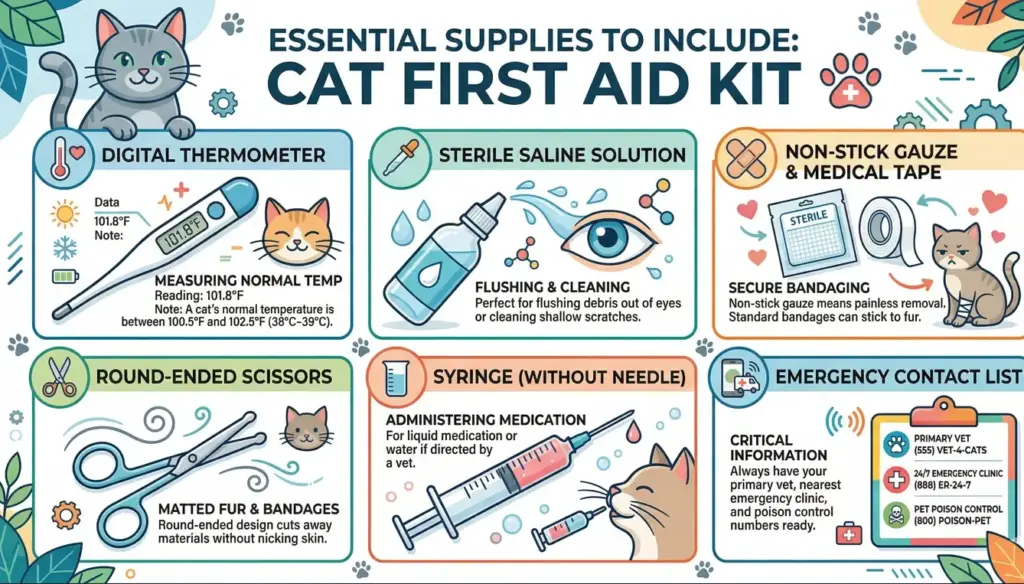
Preparation is the ultimate act of love. Just as you carefully choose the most beautiful yellow and blue accessories for your home from Furrycozy, you should curate a first aid kit that is both functional and organized. A well-stocked kit allows you to act decisively when every second counts.
Essential Supplies to Include:
- Digital Thermometer: A cat’s normal temperature is between 100.5°F and 102.5°F (38°C–39°C).
- Sterile Saline Solution: Perfect for flushing debris out of eyes or cleaning shallow scratches.
- Non-Stick Gauze and Medical Tape: Standard bandages can stick to fur, causing more pain during removal.
- Round-Ended Scissors: For cutting away matted fur or bandages without nicking the skin.
- Syringe (Without Needle): For administering water or liquid medication if directed by a vet.
- Emergency Contact List: Include your primary vet, the nearest 24/7 emergency clinic, and a pet poison control number.
Recognizing Feline Pain: The Silent Language
One of the biggest challenges in how to give first aid to a cat is that cats are masters of disguise. In the wild, showing pain makes them a target for predators. As a result, your cat might be suffering significantly while only showing subtle signs.
Watch for these “Red Flags”:

- Hiding: A social cat suddenly spending all day under the bed is a major warning sign.
- Changes in Posture: A “hunched” back or keeping the head tucked low often indicates abdominal pain.
- Purring (The Paradox): While cats purr when happy, they also purr to self-soothe when in extreme pain or near death. Don’t assume a purring cat is “fine.”
- Squinting or Third Eyelid Showing: If you can see the white membrane in the corner of their eye, they are likely feeling very unwell.
Knowing these signs allows you to initiate cat first aid protocols earlier, potentially preventing a condition from worsening.
Moving Your Cat: The Safe Transit
Once you have stabilized the situation using your cat first aid skills, the next step is professional medical attention. However, moving an injured cat can be tricky.
- The Box Method: Use a sturdy pet carrier. If you don’t have one, a laundry basket with a board over the top can work in a pinch.
- Limit Movement: Place a thick, soft blanket inside the carrier to provide cushioning and prevent the cat from sliding around during the car ride.
- The “Yellow Ribbon” Strategy: In many Western pet communities, a yellow ribbon on a carrier or leash signifies that the pet needs space. While usually for dogs, it’s a helpful signal to others at the vet clinic that your cat is in a delicate state and should not be approached by other curious pets.

When First Aid Isn’t Enough: Knowing When to Go
First aid is meant to be a bridge, not a destination. You should always follow up with a veterinarian after an emergency, but certain signs require an immediate, high-speed trip to the ER:
- Difficulty Breathing: Open-mouth breathing or blue gums.
- Seizures: Especially if they last more than 30 seconds.
- Inability to Move Hind Legs: This can indicate a “Saddle Thrombus,” a painful blood clot emergency.
- Persistent Vomiting: More than three times in an hour.
Conclusion: Empowered Love with Furrycozy
Being a pet parent is one of life’s greatest privileges. It’s about the quiet mornings, the playful afternoons, and the beautiful products that reflect your cat’s unique personality. But true love also means being the protector. By mastering cat first aid and knowing exactly how to give first aid to a cat, you are providing your feline companion with a safety net as strong as the bond you share.
At Furrycozy, we are more than just a brand; we are a community of pet lovers dedicated to the “blue and yellow” lifestyle—vibrant, safe, and sophisticated. We invite you to explore our website, www.furrycozy.com, to find premium toys, harnesses, and gifts that celebrate the joy of pet ownership.
Remember, preparation doesn’t take away the fear of an accident, but it gives you the power to act despite it. Keep this guide bookmarked, stock your kit, and continue giving your cat the cozy, beautiful life they deserve.












RECENT COMMENTS